The Plank in my Eye

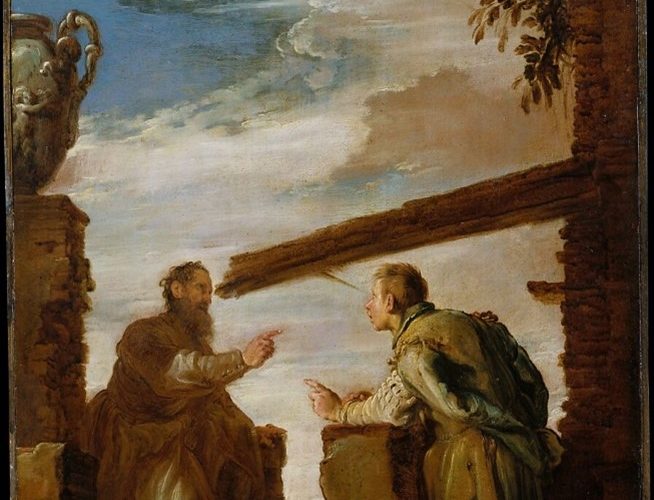
Recently, our reading in church included Jesus’ proverbial words: ‘Why do you see the speck in your neighbour’s eye, but do not notice the log in your own eye? Or how can you say to your neighbour, “Let me take the speck out of your eye”, while the log is in your own eye?’ Exploring how it has been represented, I came across this painting of the mote and beam. Domenico Fetti was an Italian Baroque painter, much influenced by Rubens, who painted a series of representations of New Testament parables which became very popular.
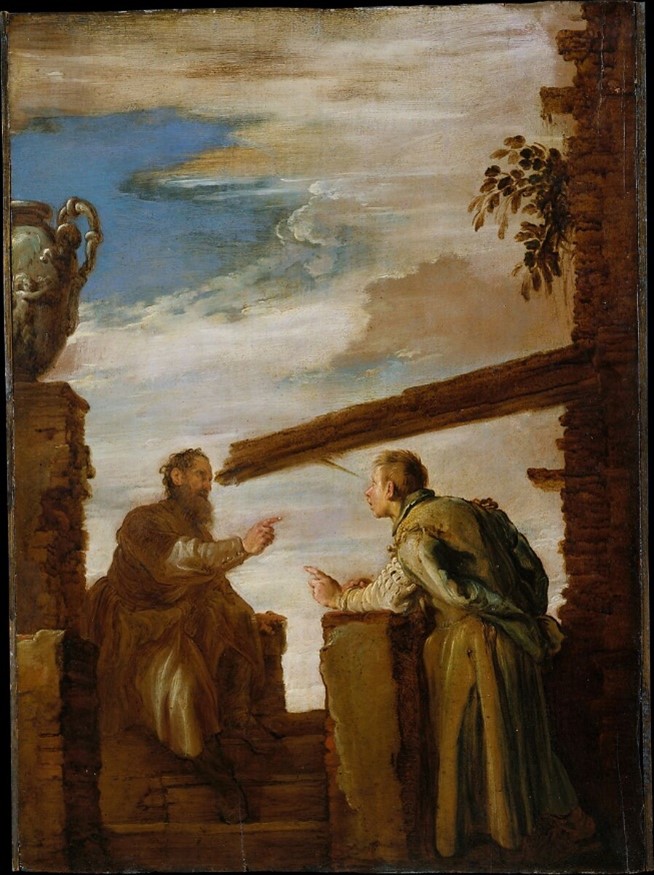
In this picture the dark, rough beam slices in a distinctly ugly fashion across a beautifully lit, delicate sky. It compels our eye to take notice of it just as it fills the vision of the older figure who sits, wagging his finger disapprovingly at the young man. The young man is not without fault, however; a sharp splinter holds his gaze and he too is pointing his finger accusatorily.
What the picture demonstrates so brilliantly, is that neither of the 2 men is actually looking at the other. They are so attentive to their log or splinter that they cannot look the other one in the eye or begin to see the world from the other’s perspective. Connection between them, let alone understanding or empathy, is impossible. No wonder, one feels, that they sit among ruins. Nothing can be created or grown or restored as long as the beam and mote remain.
I wonder if that beam is also intended to remind us of the rough wood of Christ’s cross, the cruelty and inhumanity of torture and death being where all blind judgementalism ultimately leads us.
As we wrestle with the divisions in our society, and if we long to counteract strident voices which are all too quick to blame others for problems in our country and our world, I think we should hold this image in our minds; how can we clear our own sight, looking at ourselves and our prejudices and failings with greater honesty, and how can we best seek to nurture genuine connection and engagement with others?
Revd Kate McFarlane